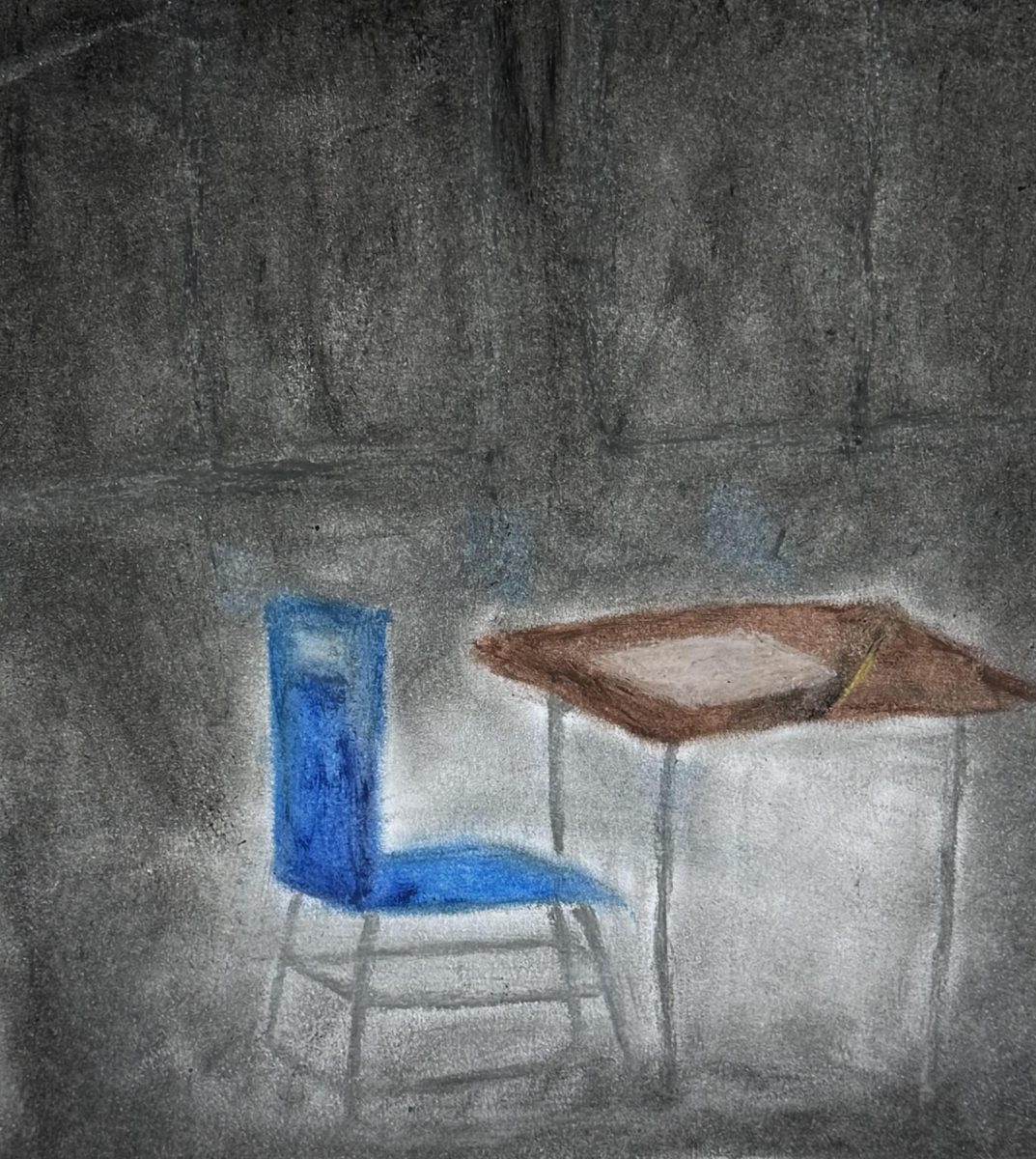
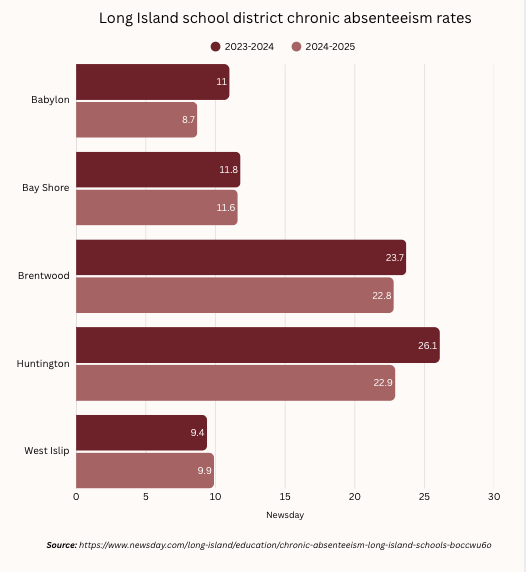
 The bell rings, another day of school passes, and the same students are dismissed. Yet, throughout the academic year, there is a set of faces that barely seem to show up–desks that remain consistently empty. Sometimes these absences are excused, other times they aren’t. Either way, these kids are simply not in school. This ongoing issue, known as chronic absenteeism, is defined as missing 10% or more of the school year, and it can have seriously negative effects on social life, mental health, and academic performance.
Dr. Michelle Garrett, one of the assistant principals at Bay Shore High School, manages the attendance and master schedule. According to Dr. Garrett, approximately 10% of students have notable attendance problems. Research shows that students who are chronically absent are less likely to read on grade level by third grade. When characterized with this level of reading ability, they are also four times more likely to drop out of high school, and score lower on standardized tests. Students with just one year of chronic absenteeism in any of their records are seven times more likely to withdraw from school.
Current and past efforts to combat truancy
Dr. Garrett says efforts have been made in the past to provide virtual class alternatives for students who were chronically absent.
“Years ago, we had a credit recovery program,” said Dr. Garrett. “In order to make up the seat time needed for the class…You would do an online program…But it was not successful because attendance was not good there either.”
Bay Shore students have the current option of attending home instruction in the event of extenuating circumstances such as medical problems. Junior Sophia Brito attended home instruction after she suffered an ankle injury last year that left her with a five-inch hole in her foot. It spiraled into a series of complicated surgeries, resulting in her missing five months of school. Once she was ready to go back to school in person, she struggled with the transition from home instruction back to a traditional learning environment.
“For Social Studies, I had a different teacher for home instruction than in real school, so he [in-school teacher] really didn’t know what I had learned, and neither did I,” said Brito. “I had been taught completely differently in home instruction. I was really behind in that class and had no idea what was going on. It was a really hard transition. I was a whole unit behind, and really stressed out.”
90% home instruction students receive instruction by their own teacher, but this was not the case for Brito’s Social Studies class. Missing school was something beyond Brito’s control, and she attended home instruction classes as told to, yet the effects of missing school in person were still devastating. However, without access to the option of home instruction at all, students would have a much more tumultuous transition back to school.
Not all students miss school for medical reasons. Attendance coordinator Mr. James Giattino has proposed combatting chronic absenteeism through disciplinary methods. According to Mr. Giattino, Bay Shore was one of the quickest districts in Suffolk County to recover from severe absenteeism following the COVID-19 pandemic.
Bay Shore went after the “smaller offenses” such as lateness first, using detention as a motivator to get students to arrive to class on time. There were also many students who were physically not attending school at all.
“…I work with guidance…we call the students, we do home visits…I’ve gone to a lot of homes…and we use conversation to reel them back to responsibility,” said Mr. Giattino.
Mr. Giattino put a significant emphasis on the importance of conversation with each individual absentee on a personal level in order to really understand their situations and direct them to a path that works out for them.
Necessary changes
Different initiatives are in place nationwide to alleviate chronic absenteeism across all demographics, but the effectiveness of each is varied, and it remains a persisting problem. Some initiatives that can be taken by local district offices are already underway here in Bay Shore. Senior Geovanna Lopez, who is also president of Bay Shore HELLO Ambassadors, has described new language-related inclusion policies.
“We have mentors…we train them to have a mentee. This mentee is a student who comes from a different country. The mentors are in charge of integrating their new students into the school environment,” said Lopez. “Now we have announcements in Spanish, which had a good impact on students who come from other countries because now they know about the clubs that the school offers, when they meet.”
Mrs. DeGraff, who teaches in the Learning Center, has closely observed absenteeism and its effects.
“Across the learning center and regular classes, I have a lot of chronically absent students. In my opinion, when kids start being chronically absent, it’s a very hard cycle to break. Especially those with high anxiety levels. They’re terrified of their teachers asking ‘where have you been?,” said DeGraff.
Like many of our interviewees, DeGraff strongly affirms the vitality of providing struggling students with spaces in the school that exist to provide support for all kinds of students.
“I try to give students a space where they can feel supported and comfortable,” said DeGraff. “The learning center is a place that has helped combat chronic absences. I try to give them an atmosphere that exists only to support them.”