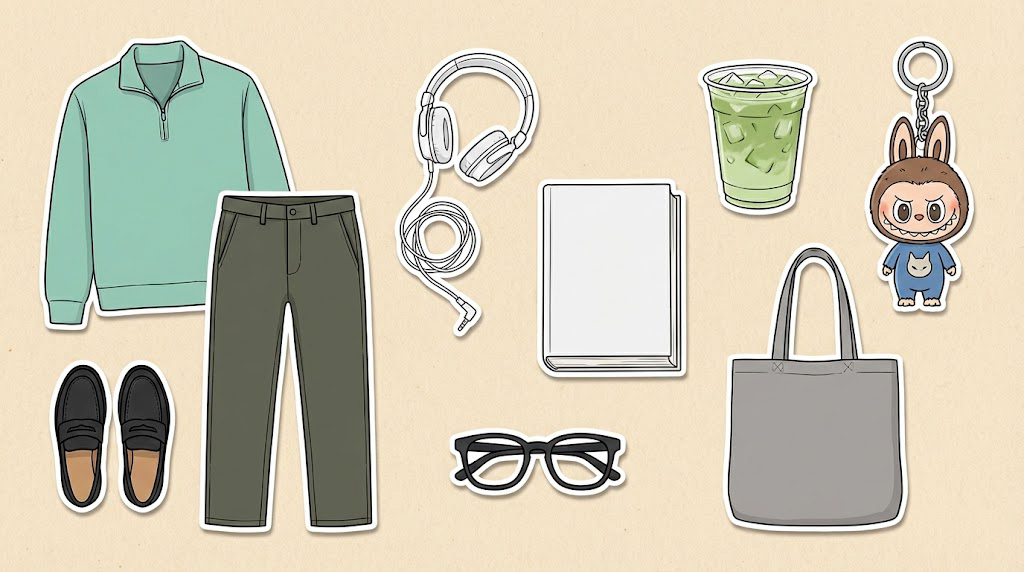
In recent months, there has been an uproar around performative behavior in men, especially in younger generations. Performativity refers to when men adopt interests, habits, or personality traits just to appear more appealing to women, rather than because they genuinely enjoy them. For example, listening to certain music, carrying tote bags, or visiting cafés for matcha drinks. While doing these things is not negative on their own, there are concerns when they are done primarily for attention or approval, rather than personal interest.
When asked what the term “performative” means, science teacher Anna Hightower described it as acting a certain way to be seen or recognized, which may be different from how someone normally acts.
“Yes, I have heard people talk about this. I think it means when people act a certain way to be seen or recognized, which may be different from how they normally act,” said Hightower. “In the context of guys, I think it means acting more confident, tough, emotionally aware, progressive, or even rebellious, not because it reflects who they are, but because they believe that’s what others expect of them.”
Many people relate performative behavior with specific stereotypes. Senior Layton Avinel said that the first example that comes to mind is a specific aesthetic that people try to copy.
“I think of obviously someone wearing a quarter zip, drinking some matcha with wired headphones in,” said Avinel. “Most people don’t even fit that aesthetic. If you think that fits you then you do you, but a lot of males just put on that type of act.”
Some believe that performative behavior comes from social media influence or difficulty making genuine connections. Sophomore Raynis Reyes Guzman said some guys may do it for attention and to appear more mature, even if it turns into a joke.
“I think some guys act performative because they want attention,” said Guzman. “I think that they are trying to look more mature and grow out of their childish behavior while also making it a bit of a joke since they all follow the same things of wearing a quarter zip and drinking matcha.”
Performativity is also believed to be more common today because of social media. Avinel said that trend-following has existed for a long time and will likely continue.
“I think trend-following has always been a thing for a long time, especially in clothing,” said Avinel. “A lot of people see someone like Kanye release a hoodie, and everyone has to get it. I believe that it’s something that will be a part of this generation forever.”
Social media is usually seen as a major influence on how people present themselves. It allows users to see trends, aesthetics, and behaviors that are rewarded with attention and approval. Science teacher Anna Hightower said that while social media didn’t create performative behavior, it can intensify it by rewarding certain behaviors.
“While social media didn’t create performative behavior, it definitely intensified it,” said Hightower. “Social media encourages people to present a curated version of themselves and rewards certain behaviors with likes, views, attention, and in some cases, money. That can make it tempting to act in ways that will be praised or shared, even if those actions don’t fully align with who someone really is.”
With constant exposure to online trends, many may feel pressure to change how they act in order to fit in or gain validation. However, others feel that exploring interests and identities is a normal part of life.
Performative behavior in men has become a widely discussed topic because of social media’s ability to spread information to the masses. While opinions differ on whether it is a negative or simply a fun trend, it shows the importance of being authentic. As social expectations continue to change, self-expression likely remains a relevant topic.